Aetna Rate Tiers
Last updated: May 28, 2026
Aetna frequently reuses the same NPI list across multiple rate tiers for a given code and billing class. This creates rate ambiguity, making it appear that multiple reimbursement rates apply to the same providers and potentially skewing aggregate rate distributions. It also creates duplication, where a simple search for 1 code and 1 provider could return hundreds of results.
According to Aetna’s reimbursement policy, NP / PhD level rates are typically set at 85% of the MD level rate, while Master’s level rates are set at 75% of the MD level rate. Previously, this rate ladder was used to infer the appropriate licensure tier for a given rate.
To simplify Aetna rate analyses, we built the “Aetna Rate Tiers” feature, located within the "Taxonomy" panel of Signal. This feature uses the Aetna rate ladder (i.e., 100%-85%-75%) to help distinguish and filter MD, PhD/NP, and MA level reimbursement rates within Aetna's networks.
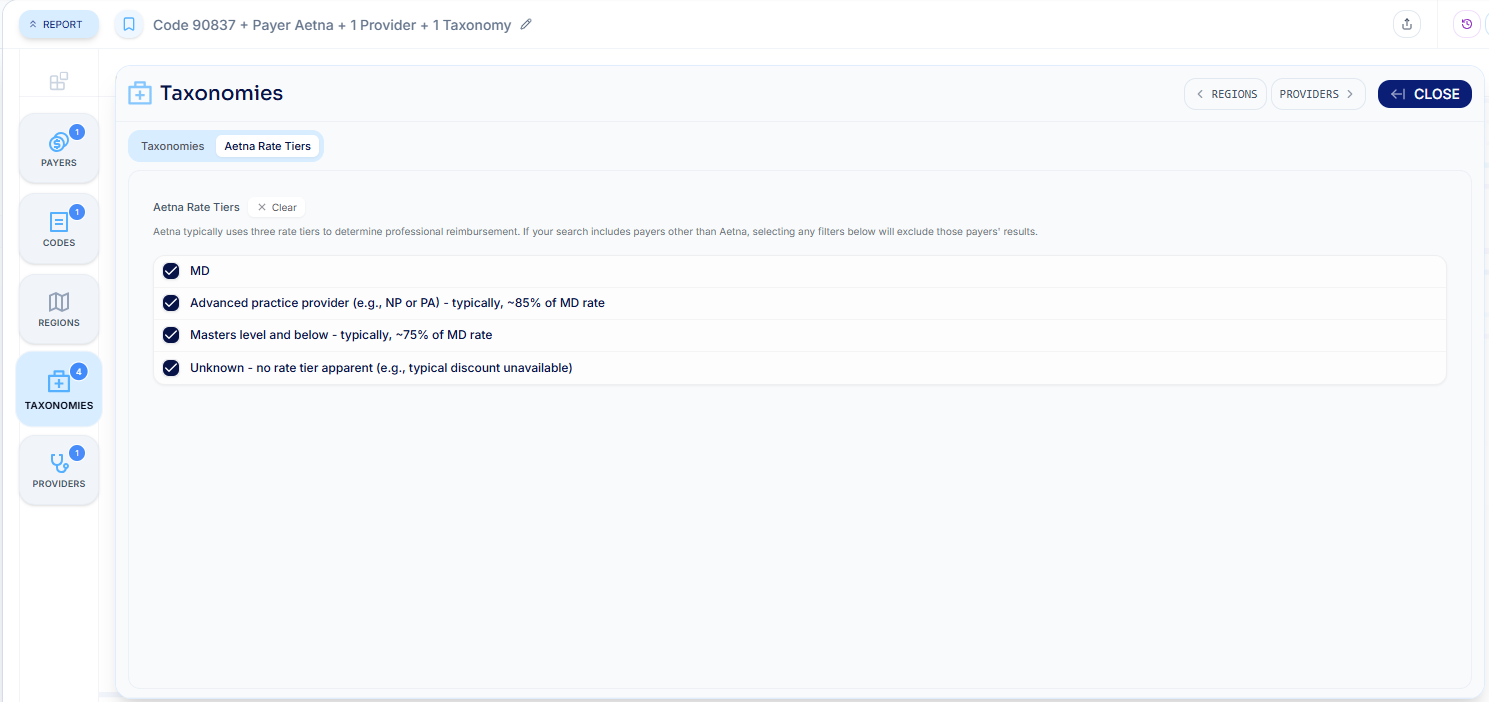
If your search includes payers other than Aetna, excluding the “Unknown” option will remove rate results from those non-Aetna payers. We are currently developing a rate tier filtering feature that will enable cross-payer and cross-provider comparisons, scheduled for release on July 1.
Rate tier labeling
If you select all options under "Aetna Rate Tiers" within the "Taxonomy" panel, the relevant rate outputs will include tier labels indicating their respective licensure in Payer Data Mode or Peer Rates mode. Alternatively, you can choose any single option (e.g., MD) to view the rate for that specific licensure only.
Payer data mode output
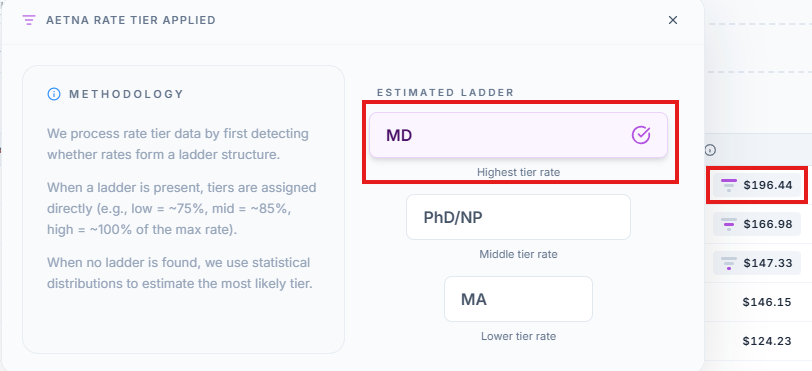
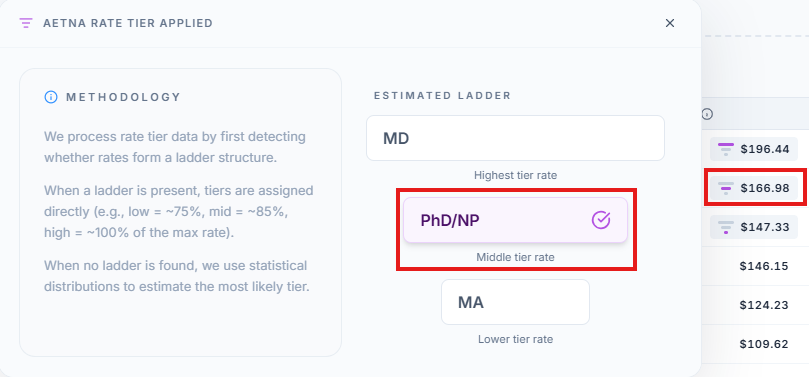
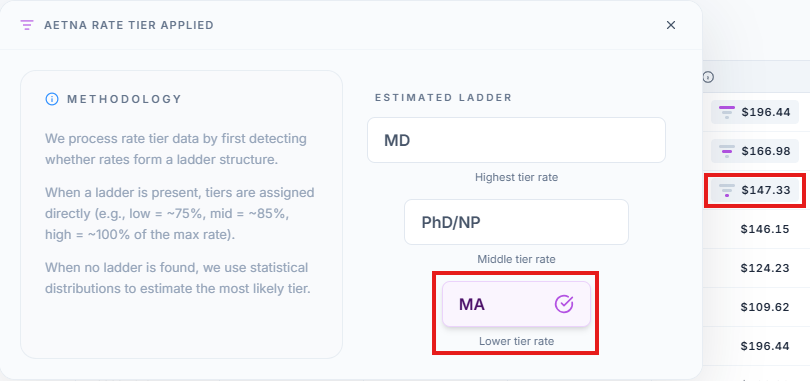
Peer rates mode output
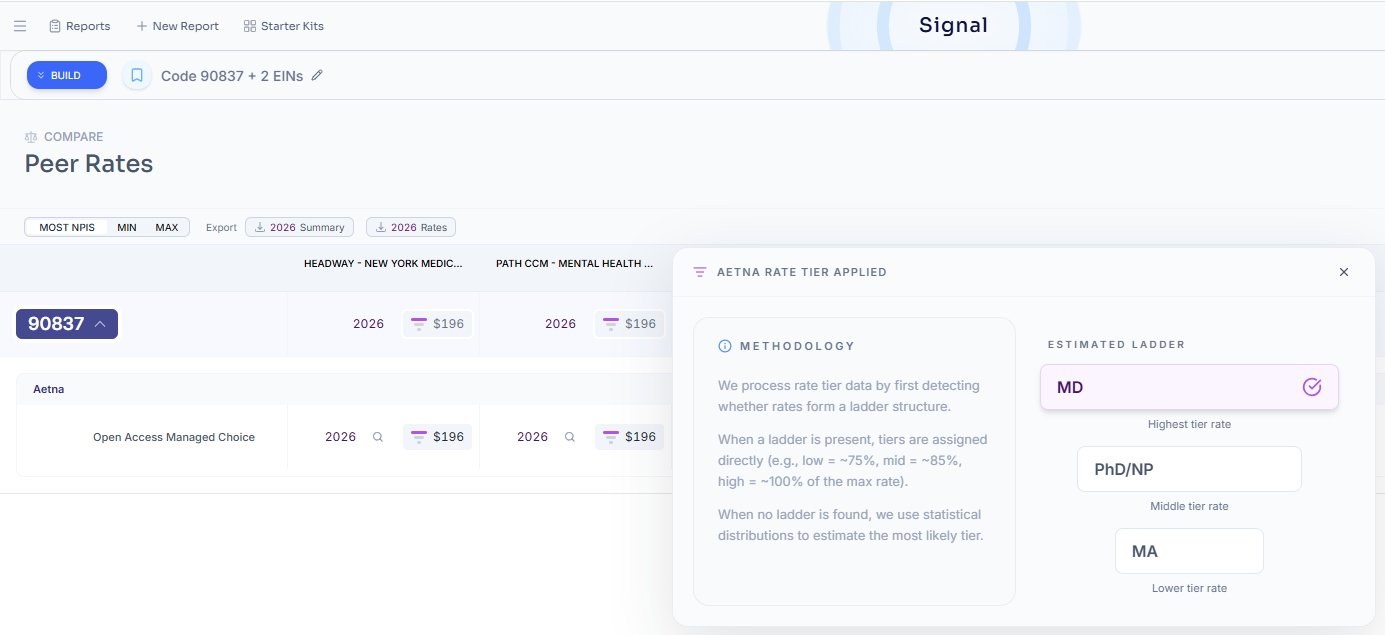
Note: Our system will label the rate tier associated with the maximum npi-list-length. So the relevant rate tier will only be labeled once for a given provider, billing class, and place of service combination.
Data export
Now, when you output the data as a .csv file, you'll have the ability to include Aetna Rate Tier Fields.
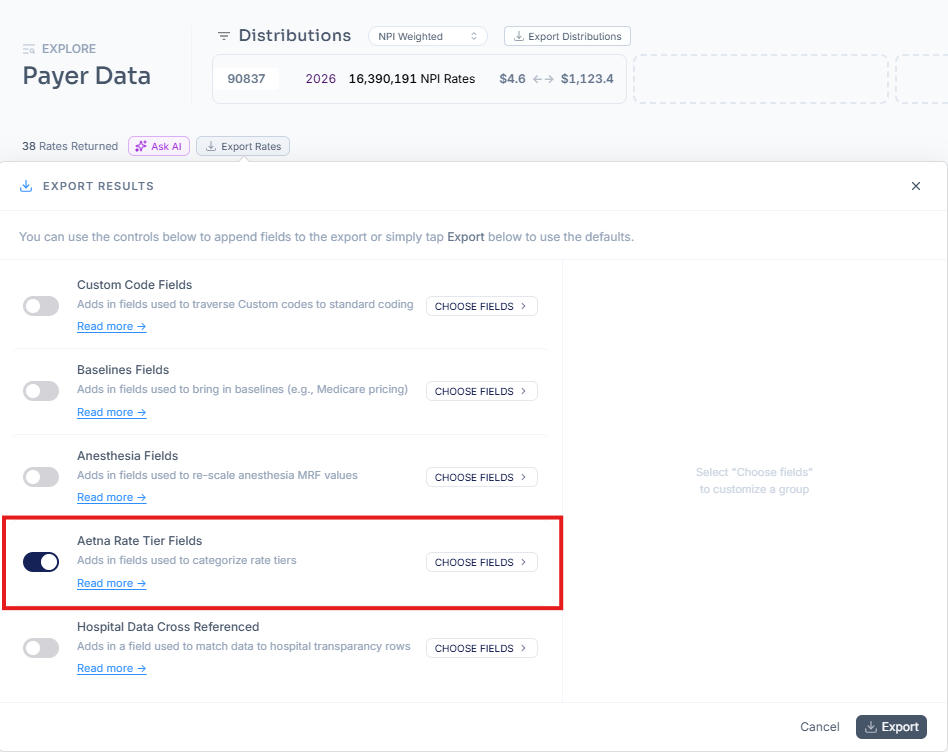
Selecting "Aetna Rate Tier Fields" will include two additional columns in your .csv file: "RateTier" and "RateTierDescription". Read our Payer Data Dictionary to learn more about those fields.